AI Pricing Transparency: SoftSolz vs. Intercom
Uncovering the true costs of AI with SoftSolz's clear metering model.
Discover how SoftSolz's transparent AI pricing model offers predictability, contrasting with Intercom's complex structure. Learn to forecast AI costs effectively.
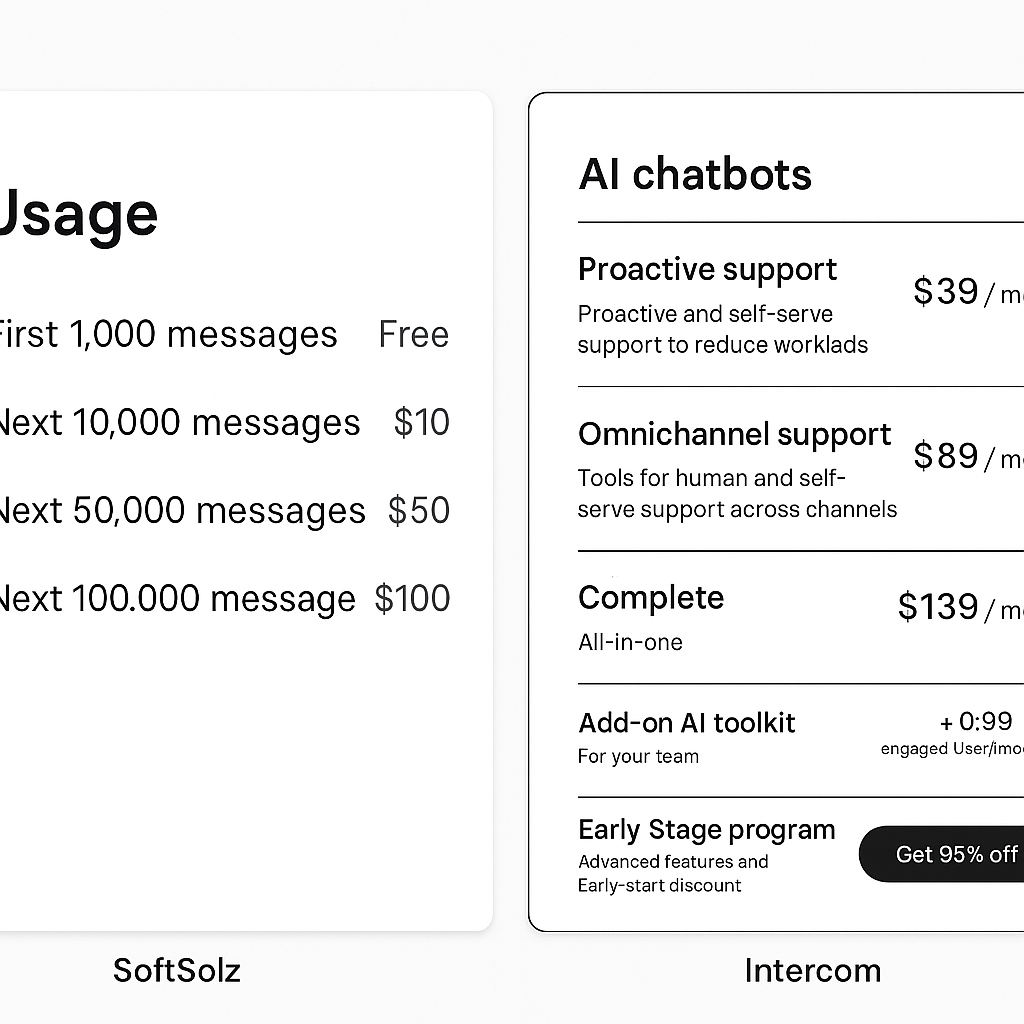
In the complex world of AI pricing, SoftSolz stands out with its transparent metering model, offering predictability and clarity in AI costs. Unlike Intercom's intricate pricing structure, SoftSolz allows businesses to forecast expenses accurately, making it a preferred choice for finance teams.
How Does SoftSolz's Metering Model Work?
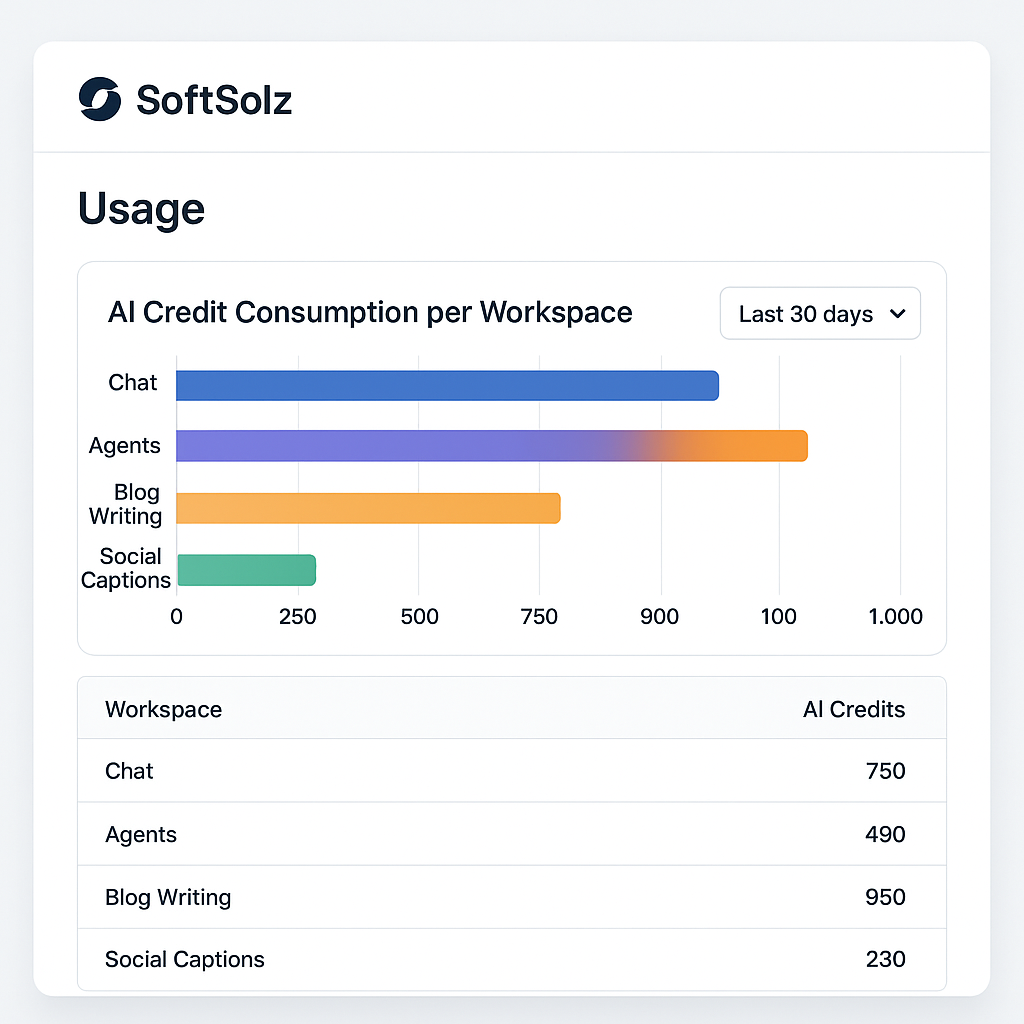
SoftSolz's metering model is designed to provide clear visibility into AI usage. Every model call across services resolves from a single admin-configured registry. This usage is then converted into AI credits by a unified calculator, and credits are recorded per workspace. This system allows users to see exactly what each activity—be it chat, agents, blog writing, or social captions—consumed.
The transparency of this model means businesses can budget and forecast AI costs with precision. By knowing the exact consumption of AI credits, companies can plan their expenses without the fear of unexpected charges.
Intercom's Pricing Model: A Complex Structure
Intercom's pricing model, on the other hand, is more complex. It involves a two-layer pricing structure with seat-based plans and additional AI agent costs. The seat plans range from $29 to $132 per seat per month, depending on the size and needs of the team. On top of this, Intercom charges $0.99 per resolution for its AI agent, Fin.
This per-resolution billing can make it difficult to predict monthly costs, as usage can vary significantly. For example, a 10-seat setup with varying resolutions can lead to unpredictable invoices, highlighting the importance of modeling usage carefully.
Comparing AI Pricing Models in 2026
AI pricing models in 2026 are diverse, with costs based on input and output tokens. Providers offer different tiers to cater to various needs:
- Budget Tier: Models like DeepSeek V4 Flash offer low-cost options for high-volume tasks.
- Mid Tier: Suitable for production apps where accuracy and context matter.
- Premium Tier: High-cost models like Claude Opus 4.8 are used for specialized tasks requiring high quality.
Strategically routing cheap traffic to budget models and reserving premium models for complex tasks can optimize costs.
Predicting AI Costs: A Worked Example
Let's consider a practical example to illustrate the differences. Suppose a company uses Intercom with 10 seats and averages 500 resolutions per month. The seat cost would be $850 (10 seats at $85 each), and the resolution cost would be $495 (500 resolutions at $0.99 each), totaling $1,345 monthly. However, fluctuations in resolutions can lead to unexpected costs.
In contrast, with SoftSolz, the company can track AI credit usage per workspace, allowing for precise budgeting and avoiding surprises.
Why SoftSolz Offers a Competitive Edge
SoftSolz's transparent pricing model provides a significant advantage for businesses looking to manage AI costs effectively. By offering clear insights into AI usage, companies can make informed decisions and allocate resources efficiently.
In contrast, Intercom's complex pricing structure can lead to unexpected expenses, making it challenging for finance teams to predict monthly bills accurately.
Conclusion: Choosing the Right AI Pricing Model
For businesses aiming to control AI expenses, SoftSolz's transparent metering model offers a clear path forward. By providing detailed insights into AI usage, it enables precise budgeting and forecasting. In contrast, Intercom's complex pricing can lead to unpredictability, underscoring the importance of choosing a pricing model that aligns with your financial goals.
Explore SoftSolz's pricing options to gain control over your AI costs and ensure financial predictability.
Discussion
Loading responses…