All-in-One Suites Fail: You Can't Uninstall Parts
Why modular marketplaces like SoftSolz offer a better solution.
All-in-one suites often fail due to their inflexibility. Discover how SoftSolz's marketplace model offers a customizable and efficient alternative.
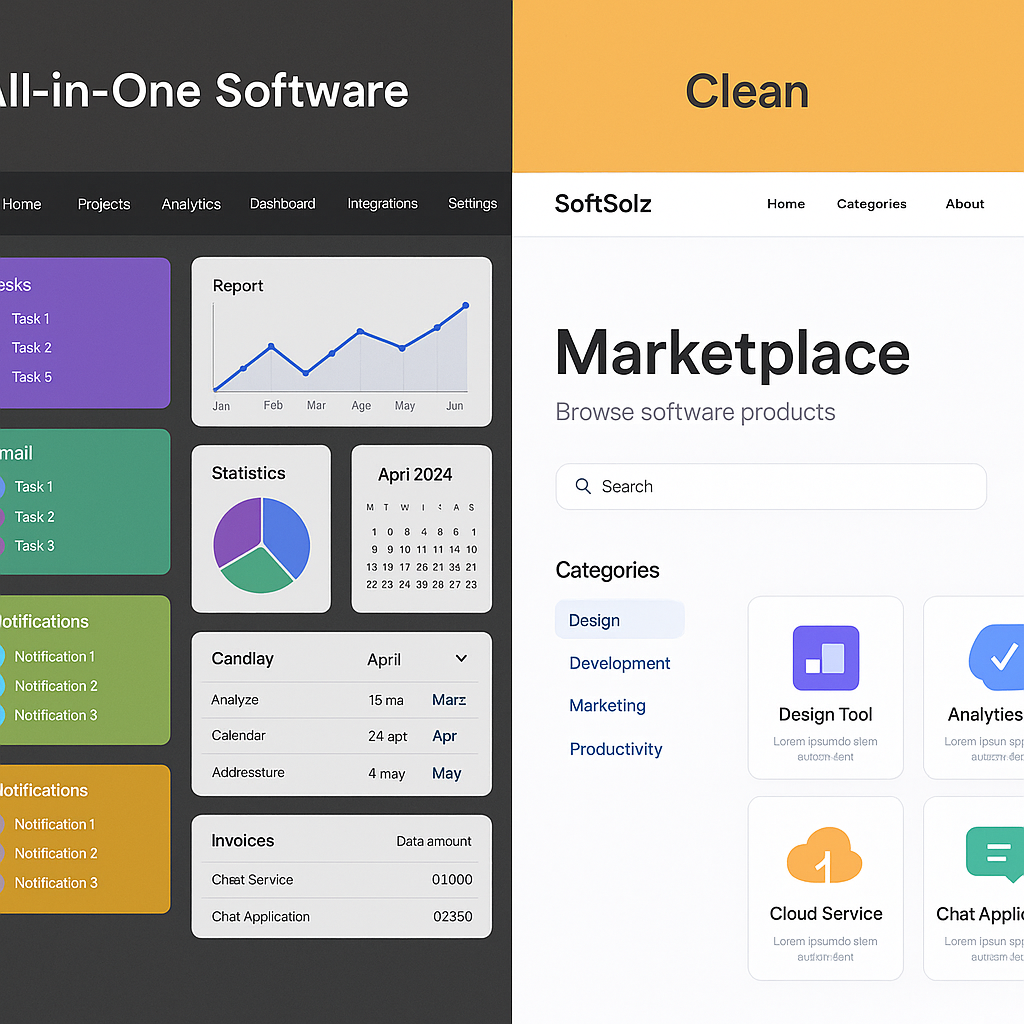
All-in-one software suites like HubSpot and Zoho One promise seamless integration and simplicity with a single vendor and contract. However, they often fall short because users cannot uninstall unwanted modules, leading to cluttered interfaces and unnecessary costs. SoftSolz's marketplace model offers a solution by allowing services to be installed and uninstalled per workspace, ensuring a streamlined user experience.
Why Do All-in-One Suites Fall Short?
All-in-one suites are designed to provide a comprehensive solution with deep integration across various business functions. The idea is appealing: one vendor, one contract, and a unified platform. However, the reality is that these suites often include modules that users neither need nor want. This results in a user interface burdened with unnecessary features and a pricing model that charges for unused services.
How Does the SoftSolz Marketplace Model Work?
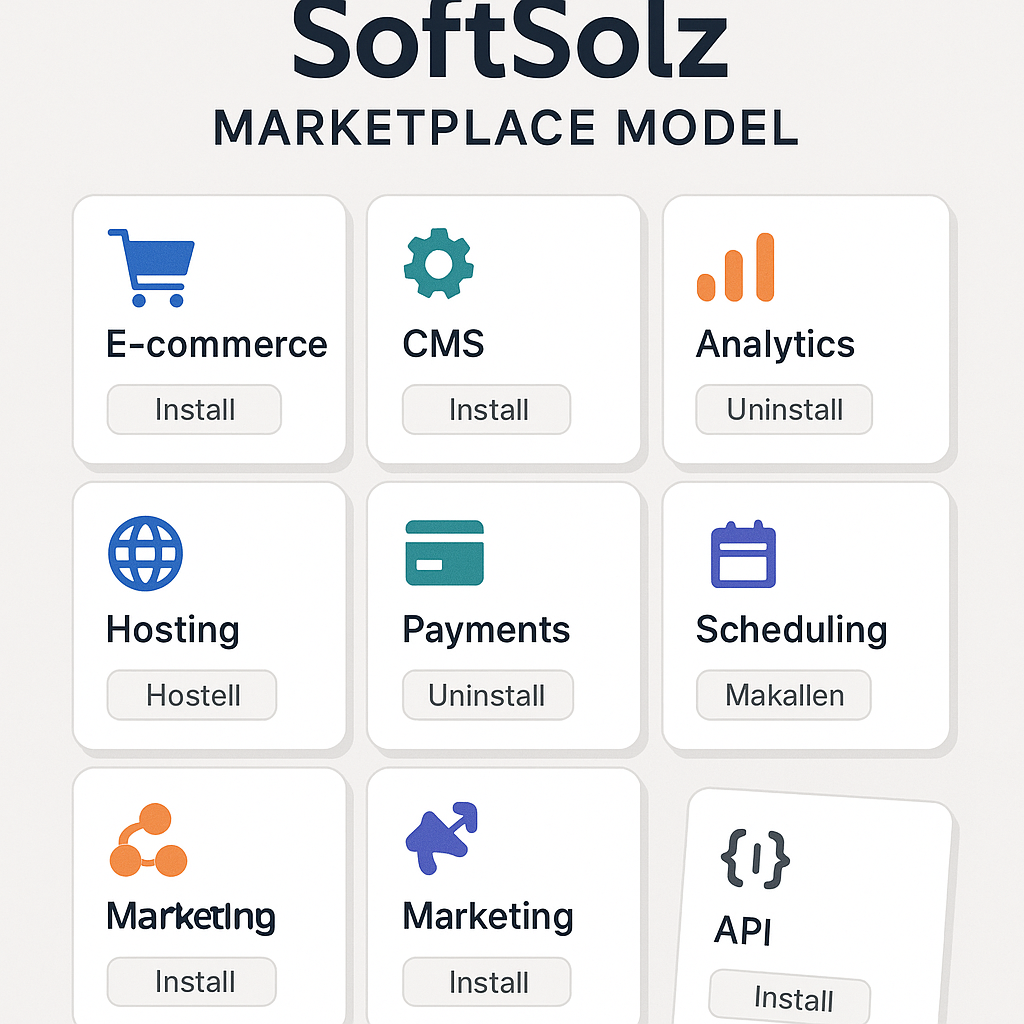
The SoftSolz marketplace model addresses these issues by allowing users to install and uninstall services as needed. Each workspace can be customized to include only the services that are relevant, and the sidebar displays only what is installed. This modular approach not only declutters the user interface but also ensures that businesses only pay for what they use.
What Happens When You Uninstall a Service?
In the SoftSolz model, uninstalling a service does not mean losing data. When a paid service is uninstalled, its data is preserved, allowing for easy reinstallation without the need for a complete rebuild. This flexibility is a significant advantage over traditional all-in-one suites, where uninstalling a module can often lead to data loss or require complex workarounds.
Why Is This Flexibility Architecturally Possible?
The architectural flexibility of the SoftSolz marketplace is made possible because each service operates as a manifest. This manifest declares its own permissions, routes, embeds, webhooks, and quotas, rather than being hardcoded into the platform's shell. This means that new services can be added simply by introducing a new manifest, without the need to rebuild the entire product.
What Are the Benefits of a Manifest-Based Architecture?
A manifest-based architecture allows for rapid deployment of new services and features. It also ensures that the platform remains lightweight and adaptable, as services can be added or removed without affecting the core system. This approach not only enhances user experience but also reduces development time and costs.
Conclusion: Why Choose SoftSolz?
For businesses seeking a flexible, cost-effective solution, the SoftSolz marketplace model offers a compelling alternative to traditional all-in-one suites. By allowing users to customize their workspace and pay only for the services they use, SoftSolz provides a streamlined, efficient platform that adapts to the needs of its users. Explore the SoftSolz marketplace today to discover how it can transform your business operations.
Discussion
Loading responses…